

Prolonged Labor: Causes, Risks & When Medical Intervention Is Needed
February 18, 2026
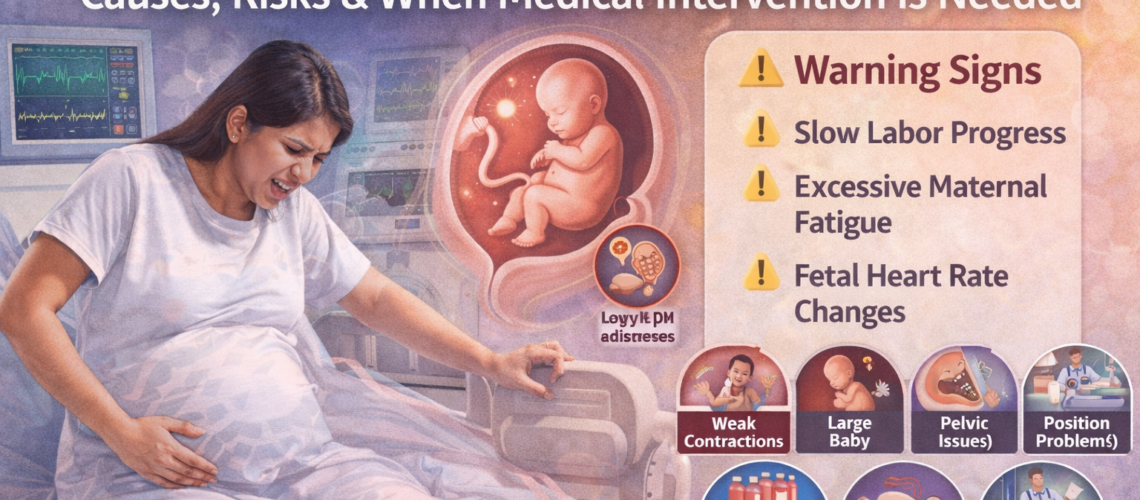
Labor is a natural process that leads to the birth of a baby, but in some cases, it may take longer than expected. When labor progresses very slowly or stalls, it is termed prolonged labor. Understanding Prolonged Labor Management is essential to ensure the safety of both mother and baby and to prevent complications during delivery.
What Is Prolonged Labor?
Prolonged labor, also called “failure to progress,” occurs when labor lasts longer than normal:
- First pregnancy: More than 20 hours
- Subsequent pregnancies: More than 14 hours
Labor may slow during cervical dilation or while pushing the baby through the birth canal.
Causes of Prolonged Labor
Several maternal and fetal factors can contribute to delayed labor progression:
1. Weak Uterine Contractions
Ineffective contractions fail to dilate the cervix adequately.
2. Large Baby (Macrosomia)
A bigger baby may have difficulty passing through the pelvis.
3. Pelvic Structure
A narrow or small pelvis can obstruct delivery.
4. Baby’s Position
Posterior or breech positioning may delay descent.
5. Maternal Exhaustion
Long labor can reduce pushing strength.
6. Epidural Effects (in some cases)
May slow down labor progression.
Warning Signs of Prolonged Labor
Doctors monitor labor closely to detect delays. Signs include:
- Slow cervical dilation
- No baby descent
- Irregular or weak contractions
- Excessive maternal fatigue
- Fetal heart rate changes
Continuous monitoring helps identify when intervention is required.
Risks Associated with Prolonged Labor
If not managed timely, prolonged labor may lead to complications:
For the Mother:
- Severe exhaustion
- Dehydration
- Infection risk
- Uterine rupture (rare)
- Postpartum hemorrhage
For the Baby:
- Fetal distress
- Oxygen deprivation
- Meconium aspiration
- NICU admission need
Early Prolonged Labor Management reduces these risks significantly.
How Is Prolonged Labor Managed?
Modern obstetrics offers multiple medical interventions:
1. Labor Augmentation
Medications like oxytocin strengthen contractions.
2. Amniotomy
Artificial rupture of membranes to speed labor.
3. Assisted Delivery
Forceps or vacuum may help guide the baby out.
4. Cesarean Section (C-Section)
Recommended if vaginal delivery becomes unsafe.
Doctors decide intervention based on maternal and fetal condition.
Can Prolonged Labor Be Prevented?
While not always preventable, risk can be minimized through:
- Regular prenatal checkups
- Monitoring baby’s growth
- Managing gestational diabetes
- Maintaining maternal fitness
- Choosing a well-equipped maternity hospital
Preparation and monitoring improve delivery outcomes.
Importance of Hospital-Based Labor Monitoring
Advanced maternity centers provide:
- Continuous fetal heart monitoring
- Labor progression tracking
- Emergency surgical readiness
- NICU backup
This ensures immediate response if complications arise.
Safe Delivery Support at Medipoint Hospital Pune
If you or your loved one is facing delayed or difficult labor, timely medical care is critical.
At Medipoint Hospital Pune, our expert obstetric team specializes in advanced Prolonged Labor Management, offering continuous fetal monitoring, assisted delivery support, and emergency C-section facilities backed by NICU care.
👉 Book your maternity consultation today
👉 Get expert labor monitoring & delivery planning
👉 Ensure safe childbirth for mother and baby
Trust Medipoint Hospital Pune for compassionate, advanced maternity care when it matters most.