

Reduced Baby Movements: When Should You Worry During Pregnancy?
February 18, 2026
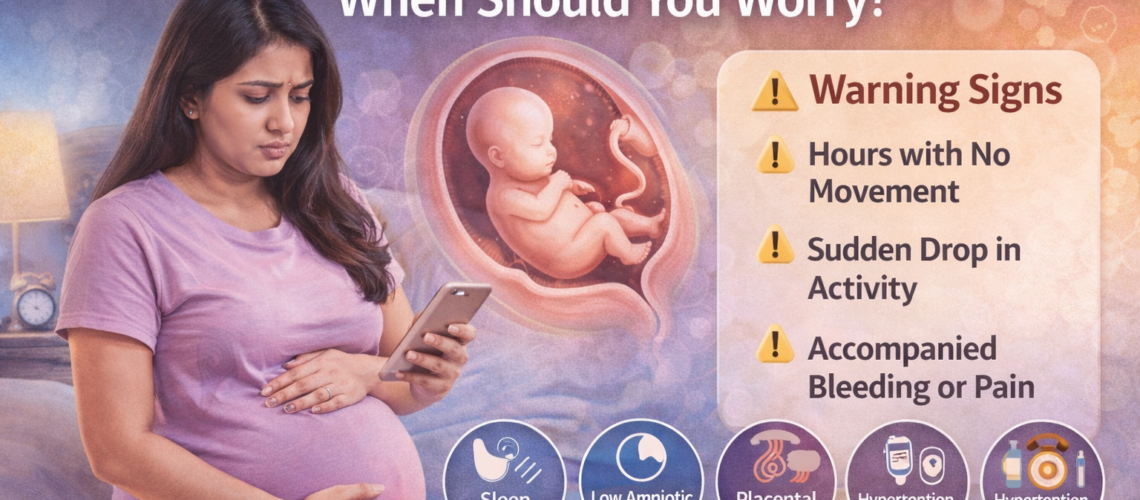
Feeling your baby move is one of the most reassuring experiences during pregnancy. These movements indicate that your baby is active and developing well. However, if you notice a sudden decrease or absence of movements, it can be concerning. Understanding Reduced Baby Movements in Pregnancy is important to ensure timely medical care and fetal well-being.
When Do Baby Movements Start?
Most mothers begin to feel fetal movements between 18 to 24 weeks of pregnancy. Initially, movements may feel like flutters or bubbles, gradually becoming stronger kicks, rolls, and stretches as pregnancy progresses.
By the third trimester, movements follow a regular pattern, and mothers become familiar with their baby’s activity cycle.
What Is Considered Reduced Baby Movement?
Reduced movement does not always mean no movement — it may refer to:
- Noticeable decrease in frequency
- Weaker kicks than usual
- No movement for several hours
- Change in baby’s regular pattern
Doctors often recommend monitoring kick counts to track fetal activity.
How to Monitor Kick Count
A simple way to assess fetal well-being at home:
- Choose a time when the baby is usually active
- Lie on your left side
- Count movements for 2 hours
- You should feel at least 10 movements
If movements are fewer, consult your doctor immediately.
Causes of Reduced Baby Movements
Several temporary or serious factors may cause decreased fetal activity:
1. Baby’s Sleep Cycle
Babies sleep for 20–40 minutes, causing temporary inactivity.
2. Maternal Factors
Dehydration, low nutrition, smoking, or certain medications.
3. Placental Issues
Reduced blood flow may affect oxygen supply.
4. Low Amniotic Fluid
Restricts baby’s movement space.
5. Gestational Diabetes or Hypertension
May affect fetal growth and activity.
6. Fetal Distress
In rare cases, reduced movements may indicate emergency complications.
Warning Signs Requiring Immediate Medical Attention
Do not delay hospital consultation if you notice:
- No movement for more than 6–8 hours
- Sudden sharp decline in activity
- Associated bleeding or pain
- High blood pressure symptoms
- Fluid leakage
Early intervention can prevent complications.
How Doctors Diagnose the Cause
Hospitals use advanced fetal monitoring tools:
Non-Stress Test (NST)
Measures fetal heart rate response to movement.
Ultrasound Scan
Evaluates fetal growth and amniotic fluid.
Doppler Study
Checks placental and cord blood flow.
Biophysical Profile (BPP)
Assesses overall fetal well-being.
These tests help determine whether the baby is safe or requires urgent care.
Can Reduced Baby Movements Be Prevented?
While not always preventable, risk can be reduced by:
- Staying hydrated
- Eating nutritious meals
- Monitoring blood sugar & BP
- Attending regular prenatal visits
- Avoiding smoking & alcohol
Routine monitoring ensures early detection of fetal distress.
Expert Fetal Monitoring at Medipoint Hospital Pune
If you notice Reduced Baby Movements in Pregnancy, do not ignore the signs. Immediate medical evaluation can safeguard both mother and baby.
At Medipoint Hospital Pune, our maternity specialists provide advanced fetal monitoring, NST testing, and emergency obstetric care supported by NICU facilities.
👉 Book your pregnancy checkup today
👉 Get expert fetal movement assessment
👉 Ensure safe pregnancy monitoring
Your baby’s safety starts with timely care — trust Medipoint Hospital Pune for comprehensive maternity support.