

Normal Pregnancy Discomforts vs Warning Signs: A Trimester-Wise Guide
January 16, 2026
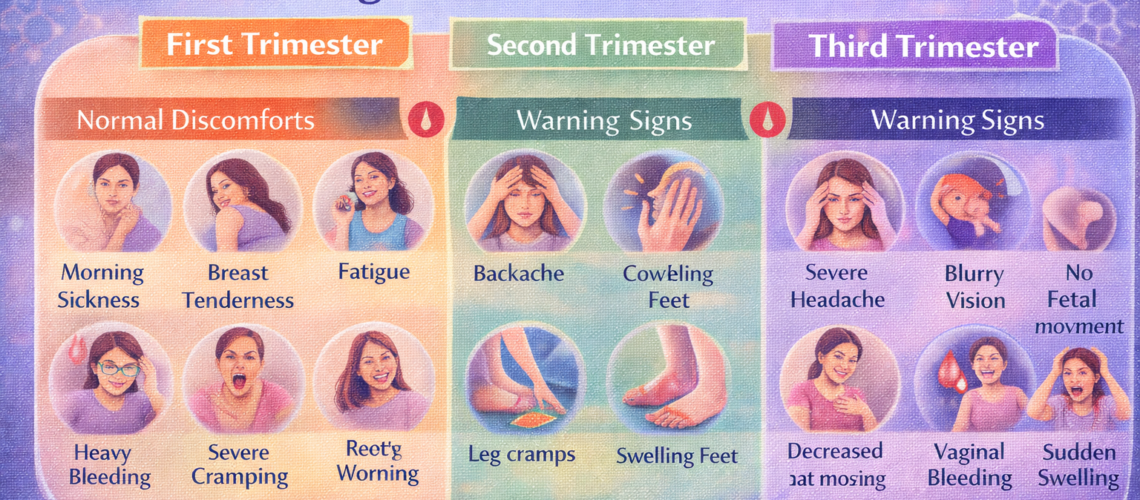
Normal pregnancy discomforts vs warning signs can be confusing for many expectant mothers, especially first-time parents. Pregnancy brings many physical and emotional changes, most of which are completely normal. However, some symptoms may indicate complications and require immediate medical attention. Understanding the difference helps ensure a safer pregnancy for both mother and baby.
First Trimester (Weeks 1–12)
During the first trimester, the body undergoes major hormonal changes.
Common normal discomforts:
- Nausea and morning sickness
- Fatigue and sleepiness
- Mild abdominal cramps
- Breast tenderness
- Frequent urination
These symptoms usually improve as the pregnancy progresses and are part of normal adjustment.
Warning signs to watch for:
- Heavy vaginal bleeding
- Severe abdominal pain
- Persistent vomiting leading to dehydration
- High fever or chills
If any of these occur, medical evaluation is essential.
Second Trimester (Weeks 13–26)
The second trimester is often considered the most comfortable phase of pregnancy.
Normal pregnancy discomforts include:
- Backache
- Leg cramps
- Mild swelling of feet
- Stretch marks
- Occasional dizziness
These changes are expected as the uterus grows and posture shifts.
Warning signs during this trimester:
- Sudden swelling of face or hands
- Severe headaches
- Blurred vision
- Persistent lower abdominal pain
- Reduced fetal movements after 20 weeks
These symptoms should not be ignored and may indicate underlying complications.
Third Trimester (Weeks 27–40)
As delivery approaches, physical discomfort increases.
Normal discomforts may include:
- Shortness of breath
- Heartburn
- Difficulty sleeping
- Pelvic pressure
- Braxton Hicks contractions
These symptoms are common as the baby grows and prepares for birth.
Serious warning signs include:
- Vaginal bleeding
- Sudden severe swelling
- Severe abdominal pain
- Decreased or absent fetal movements
- Leakage of fluid from the vagina
- Regular painful contractions before 37 weeks
Immediate medical attention is required if any of these occur.
Why Knowing the Difference Matters
Understanding normal pregnancy discomforts vs warning signs helps reduce anxiety while ensuring timely care. Ignoring warning signs can delay diagnosis and increase risks for both mother and baby. Early medical intervention can prevent complications such as preterm labor, high blood pressure disorders, or fetal distress.
When to Contact Your Doctor
Always trust your instincts. If something feels unusual or worrying, it’s better to seek medical advice. Regular antenatal check-ups play a key role in monitoring maternal and fetal health and identifying potential risks early.
Importance of Comprehensive Maternity Care
A well-equipped maternity hospital provides continuous monitoring, advanced diagnostics, emergency care, and neonatal support when needed. This ensures both routine pregnancy concerns and unexpected complications are handled safely.
At Medipoint Hospital Pune, expectant mothers receive personalized maternity care, expert obstetric support, and 24/7 emergency services. The focus is on early detection, patient education, and safe delivery outcomes.
Final Thoughts
Pregnancy is a journey filled with changes—many normal, some requiring attention. Knowing the difference between normal pregnancy discomforts vs warning signs empowers mothers to seek care at the right time. With regular check-ups, awareness, and expert guidance, most pregnancies progress smoothly toward a healthy delivery.