

A Complete Guide to Child Vaccination Schedules and Why They Matter
December 12, 2025
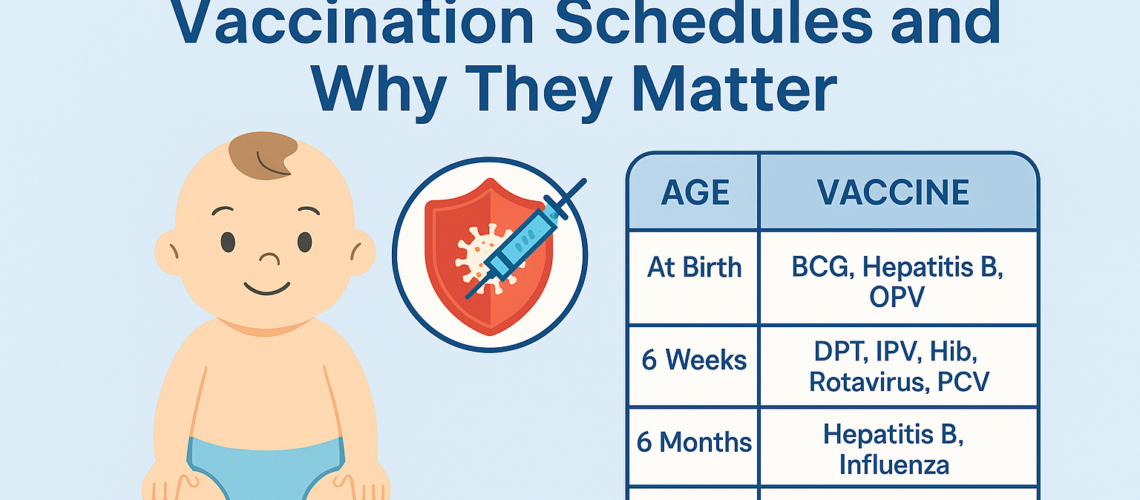
Childhood vaccinations are one of the most effective ways to protect children from serious, life-threatening diseases. They not only safeguard your child’s health but also help build community-wide immunity. Understanding the child vaccination schedule recommended by national and international health bodies ensures timely protection during the most vulnerable years of life. For new parents, this guide offers a clear breakdown of why vaccines matter, when they should be given, and how they contribute to your child’s long-term well-being.
Why Vaccinations Are Important
Vaccines work by preparing the body’s immune system to fight infections before they occur. In babies and young children, the immune system is still developing, which makes them more susceptible to diseases like measles, influenza, whooping cough, and polio. Following a child vaccination schedule ensures that immunity is built at the right age, preventing severe complications, hospitalization, or long-term health issues.
Vaccination also plays a crucial role in herd immunity. When large sections of a population are immunized, the spread of contagious diseases reduces drastically. This protects infants who are too young to be vaccinated, as well as children with weakened immunity.
Recommended Child Vaccination Schedule (Indian Academy of Pediatrics – IAP)
While schedules may vary slightly based on your pediatrician’s recommendations, the following is a commonly followed vaccination timeline in India:
At Birth
- BCG
- Hepatitis B (1st dose)
- OPV (Oral Polio Vaccine)
6 Weeks
- DPT (1st dose)
- IPV (Inactivated Polio Vaccine)
- Hib (Haemophilus Influenzae Type B)
- Rotavirus (1st dose)
- PCV (Pneumococcal)
- Hepatitis B (2nd dose)
10 Weeks
- DPT (2nd dose)
- IPV
- Hib
- Rotavirus (2nd dose)
- PCV (2nd dose)
14 Weeks
- DPT (3rd dose)
- IPV
- Hib
- Rotavirus (3rd dose)
- PCV (3rd dose)
6 Months
- Hepatitis B (3rd dose)
- Influenza (1st dose)
9 Months
- MMR (Measles, Mumps & Rubella)
- OPV Booster
12 Months
- Hepatitis A (1st dose)
15–18 Months
- MMR (2nd dose)
- DPT Booster
- Hib Booster
- PCV Booster
- Varicella (Chickenpox)
2 Years
- Hepatitis A (2nd dose)
5 Years
- DPT Booster
- OPV Booster
10–12 Years
- Tdap Booster
- HPV (for girls)
Your pediatrician may adjust this schedule based on your child’s health, birth weight, preterm delivery, or vaccination history.
Benefits of Following the Vaccination Schedule
- Prevents life-threatening diseases such as meningitis, pneumonia, measles, and polio.
- Boosts immunity during early development, reducing hospital visits.
- Ensures school readiness, as many schools require up-to-date vaccinations.
- Reduces the spread of infections within families and communities.
- Protects future generations by helping eliminate dangerous diseases long-term.
Are Vaccines Safe for Children?
Yes. All approved vaccines undergo rigorous testing and continuous monitoring. Mild side effects such as fever, swelling, or fussiness are common and temporary. Serious reactions are extremely rare. Always consult your pediatrician if your child has allergies or a weakened immune system.
Child Vaccination at Medipoint Hospital, Pune
At Medipoint Hospital Pune, the Paediatrics & Neonatology Department ensures that every child receives vaccinations as per the IAP-recommended schedule. With experienced pediatricians, a caring environment, and complete vaccination records, the hospital offers safe, accurate, and timely immunizations for all age groups—from newborns to adolescents. Parents can also receive personalized counselling on vaccine benefits, side effects, and child health milestones.